
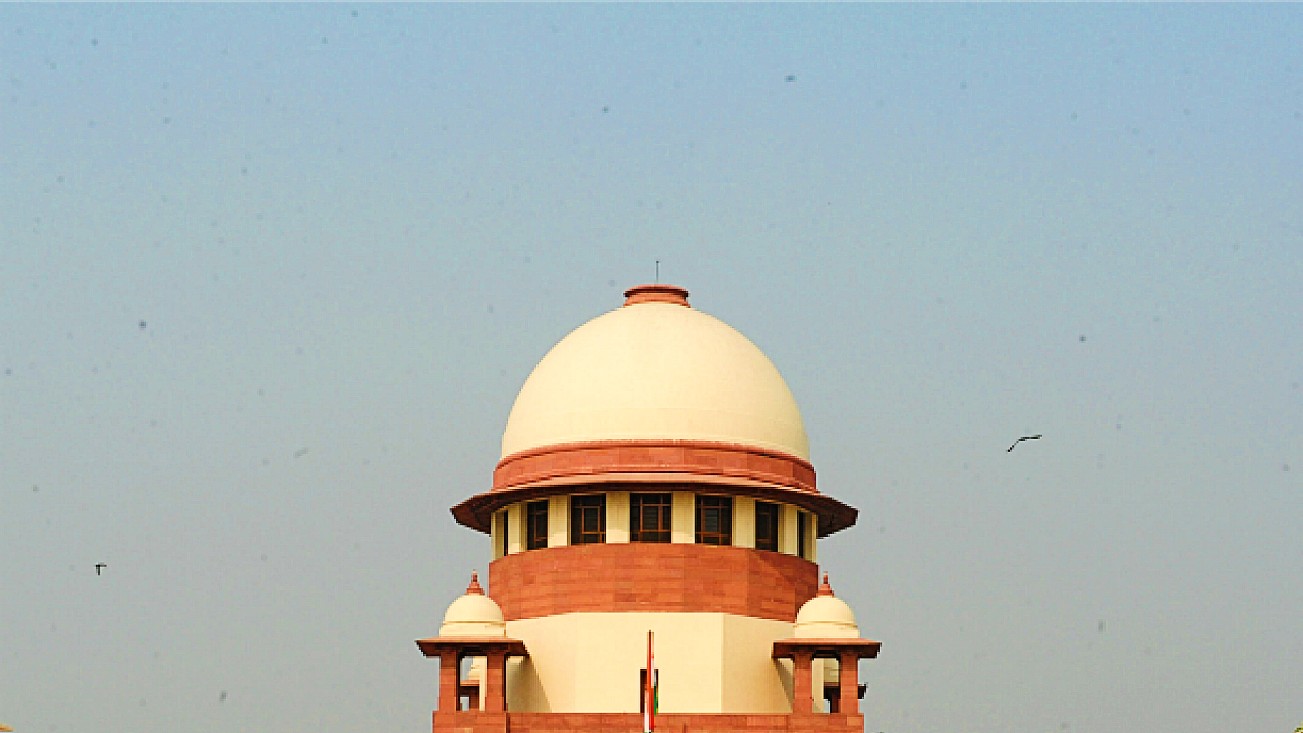
In W.P. (Civil) No.152 of 2023-SC- Top Court allows plea of AAP’s prospective mayoral candidate, Shelly Oberoi, directs notice convening first meeting of MCD to be issued within 24 hours
Justices D.Y. Chandrachud, P.S. Narasimha & J.B. Pardiwala [17-02-2023]
Read Judgment: SHELLY OBEROI & ANR V. OFFICE OF LIEUTENANT GOVERNOR OF DELHI & ORS
LE Correspondent
New Delhi, February 20, 2023: In a writ petition moved by the AAP party’s perspective mayoral candidate, Shelly Oberoi, the Supreme Court has asked that the notice convening the first meeting of the Municipal Corporation of Delhi at which the election of the Mayor, Deputy Mayor and members of the Standing Committee would be conducted shall be issued within a period of twenty four hours.
A Larger Bench of Justice D.Y. Chandrachud , Justice Pamidighantam Sri Narasimha and Justice J.B. Pardiwala allowed the present petition by observing that at the first meeting of the Municipal Corporation of Delhi, the election shall be held first for the post of Mayor and at that election, the members who are nominated in terms of Section 3(3)(b)(i) of the Delhi Municipal Corporation Act shall not have the right to vote.
The jurisdiction of the Top Court under Article 32 of the Constitution had been invoked for seeking diverse reliefs pertaining to the constitution of the Municipal Corporation of Delhi following the elections which took place on December 4, 2022. These elections were held to elect 250 Councillors. The first petitioner was a prospective candidate for the post of Mayor. Though over two months have elapsed since the date of the election, the election of the Mayor was not held.
Though the jurisdiction of this Court was invoked for seeking several reliefs, the point of controversy was narrowed down to two issues. The first issue was whether aldermen, as they are popularly described, who are nominated by the Administrator under Section 3(3)(b)(i) have the right to vote at the first meeting of the Corporation where the Mayor would be elected. The second issue pertained to the order for holding elections, more specifically, whether, as the petitioners assert, the election to the office of the Mayor shall be held first followed by the elections to the Deputy Mayor and other members of the Standing Committee, on which meetings the Mayor would preside. The opposing viewpoint was that all elections would be held simultaneously.
After considering the submissions from both the sides, the Court noted, the source of the statutory provision is contained in Article 243R of the Constitution itself. Part IXA of the Constitution was introduced by the Constitution (Seventy Fourth Amendment) Act 1992.
Article 243R provides for the composition of Municipalities. As already noted, the Constitution provides for direct election to all the seats in Municipality, save as specified in clause (2) which enunciates the exceptions. Clause (2) contains provisions, inter alia, for the representation in a Municipality of persons having special knowledge or experience in Municipal administration as well as other persons such as members of the House of the People and the Legislative Assembly and members of the Council of States and the Legislative Council of the States representing the specific constituency and the Chairpersons of the Committees constituted under clause (5) of Article 243S.
The Constitution imposed a restriction in terms of which nominated members who are brought in on account of their special knowledge or experience in Municipal administration do not have the right to vote. The same restriction finds statutory recognition in Section 3(3)(b)(i) of the Delhi Municipal Corporation Act.
The above provisions indicate that persons who are nominated under the sub-clause shall not have the right to vote in the meetings of the Corporation. The Constitution and the Act place value on their experience but the right to vote is not granted to them at meetings of the Corporation. The meetings of the Corporation would include all meetings, including the first meeting which is held after the holding of the general election, the Bench held.
The prohibition on nominated members exercising the right to vote in terms of Section 3(3)(b)(i) shall, therefore, also apply to the first meeting of the Corporation at which the Mayor and, thereafter, the Deputy Mayor are to be elected, the Court noted while referring to the judgment in Ramesh Mehta v Sanwal Chand Singh.
It was also pertinently noted, that on February 2, 2023, the Urban Development Department of the Government of NCT of Delhi issued a notification clarifying that the election of the Mayor, as required by Section 35 of the Act, shall first be held and the Mayor so elected will then assume the Chair and proceed to conduct the election of the Deputy Mayor and six members of the Standing Committee. The aforesaid notification was issued in the context of a meeting which was to be held on 6 February 2023, which could not be held on that day due to intervening circumstances.
Hence, the Court held that at the first meeting of the Municipal Corporation of Delhi, the election shall be held first for the post of Mayor and at that election, the members who are nominated in terms of Section 3(3)(b)(i) of the Act shall not have the right to vote.
The Court ordered that upon the election of the Mayor, the Mayor shall act as the presiding authority for conducting the election of the Deputy Mayor and the members of the Standing Committee at which also the prohibition on the exercise of vote by the nominated members in terms of Section 3(3)(b)(i) shall continue to operate.
Allowing the petition, it was also directed by the Bench that the notice convening the first meeting of the Municipal Corporation of Delhi shall be issued within a period of twenty four hours. The notice shall fix the date for convening the first meeting at which the election of the Mayor, Deputy Mayor and members of the Standing Committee shall be conducted in terms of the above directions.
Legitquest is a Legal-Tech venture run by a versatile team of tech-savvy attorneys, engineers and designers who aim to make the practice of law simpler for its end users. We have eminent jurist Mr. Ram Jethmalani as our patron

Add a Comment