
In First Appeal No.184 of 2022-BOM HC- Death or injury in course of boarding or de-boarding train is to be treated as untoward incident entitling victim to compensation not falling under proviso to Sec.124-A of Railways Act: Bombay HC directs Railways to pay over Rs 5 lakh to victim
Justice Abhay Ahuja [04-10-2022]
Read Order: LAXMAN S/O GANESH KANHOJIA V. UNION OF INDIA
LE Correspondent
Nagpur, October 7, 2022: While observing that the Railways Act, 1989 is a beneficial legislation and the provisions should be given a wide and liberal interpretation, the Nagpur Bench of the Bombay High Court has granted a compensation of over Rs 5 lakh to a victim after noting that the case was of an untoward incident and was not a case of self inflicted injury or any other exception as contained in the proviso to Section 124-A.
“It is settled that the death or injury in the course of boarding or de-boarding a train is to be treated to be an untoward incident entitling the victim to compensation not falling under the proviso to Section 124-A of the Railways Act”, the Single-Judge Bench of Justice Abhay Ahuja said while allowing the appeal of a victim-passenger against the order of the Railway Claims Tribunal, Nagpur.
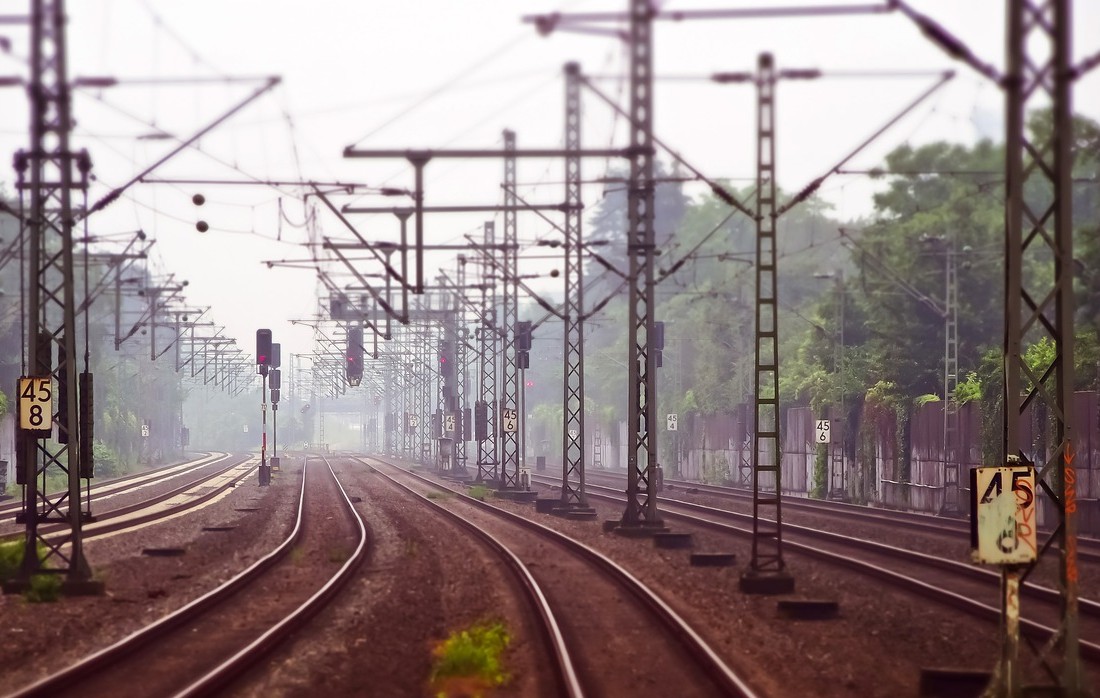
In this case, the appellant was travelling by the Train- U.P. Maharashtra Express from Bhandara to Nagpur. On the fateful day, it was claimed by him that he was standing near the lavatory of the compartment, at the time when due to a sudden jerk near D-Cabin, Mominpura area at Nagpur Railway Station, he fell down from the running train and suffered injuries, resulting which his leg got severed.
He was admitted to Mayo Hospital Nagpur, where he was diagnosed as having railway track injury below the knee amputation, however, the closure was done above the knee. The appellant was a bona fide passenger holding a valid journey ticket, which was verified from the Chief Booking Clerk.
Soon after the incident, a statement was given by the appellant to the Railway Government Police (“GRP”), where he stated that he alighted from the running train, but he fell down and his right leg came under the wheels of the train due to which his leg was severed from below the knee.
However, in the claim made by him, the appellant/claimant stated that he was standing near the lavatory and because of the sudden jerk, he fell down as he could not balance himself and his right leg came under the wheels of the train near Mominpura area, and thereafter, he was admitted to Mayo Hospital and during his treatment, his right leg was amputated above the knee.
The Tribunal observed that the nature of the incident does not fall in the category of an untoward incident of “fallen down” from the train. That the Applicant has been injured due to his carelessness and negligence, and therefore, he was not entitled to any compensation as the same is a self inflicted injury. The Tribunal observed that such self-inflicted injury could be irrespective of the intention acting with total recklessness and throwing all norms of caution to the wind regardless of his age, circumstances and acting to his detriment. Hence, this appeal was filed.
After considering the rival contentions from both sides, the Court noted that in the present case evidently, the appellant was a bona fide passenger and providentially there was no dispute on this issue. The Court was of the view that this was not a case of criminal negligence or a case of self-inflicted injury.
Even assuming that the appellant may have been negligent or rather irresponsible and careless towards himself while alighting from a running train, that cannot be concluded to mean that he self inflicted upon himself the injury or that he had the intention to have his right leg amputated. There was therefore no doubt with the fact that that the present case was of an untoward incident as defined in Section 123(c)(2) of the Railways Act, as admittedly there has been a falling down while alighting or deboarding the train and which in the absence of any contrary evidence would be nothing, but accidental, the Court noted.
Stating that an accident or accidental fall may not always happen because there was a jerk in the train, the Bench emphasized that this was not a case of self-inflicted injury nor has the Administration claimed or proved any other exception. Therefore, the findings of the Tribunal that there was no untoward incident needs to be rejected as erroneous, the Court observed.
In view of the above elucidation holding that this was a case of an untoward incident and that this was not a case of self inflicted injury or any other exception as contained in the proviso to Section 124-A, the Bench held that the appellant shall be entitled to compensation under Section 124-A of the Railways Act and asked Railways to pay a sum of Rs 5,60,000 by depositing the said amount in the savings bank account of Appellant/Claimant within a period of six weeks after due verification.
Legitquest is a Legal-Tech venture run by a versatile team of tech-savvy attorneys, engineers and designers who aim to make the practice of law simpler for its end users. We have eminent jurist Mr. Ram Jethmalani as our patron

Add a Comment