
In CIVIL APPEAL NOs. 8233-8234 OF 2022-SC- Locus of petitioner who initiates PIL is of extreme importance as such litigation should not be abused by motivated individuals to abuse process of Court for their political purposes: SC
Justices Uday Umesh Lalit, S. Ravindra Bhat & Sudhanshu Dhulia [07-11-2022]

Read Judgment: STATE OF JHARKHAND Vs SHIV SHANKAR SHARMA & ORS
Mansimran Kaur
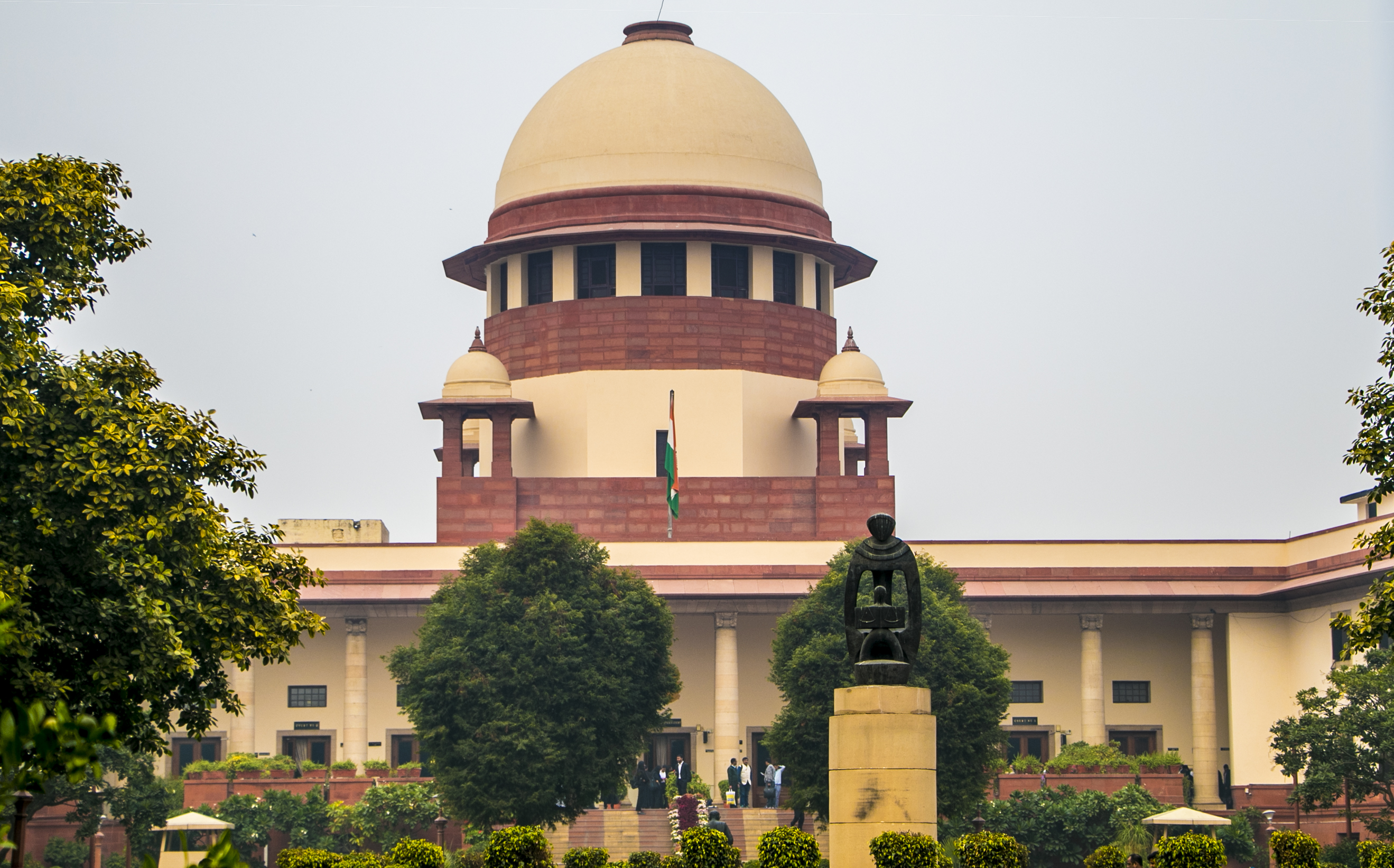
New Delhi, November 9, 2022: The Supreme Court has observed that Public Interest Litigation is the bona fide of the petitioner who files the PIL. It is an extremely relevant consideration which must be examined by the Court at the very threshold itself and this has to be done irrespective of the seemingly high public cause being espoused by the petitioner in a PIL.
The Larger Bench of Justice Uday Umesh Lalit and Justice S. Ravindra Bhat and Justice Sudhanshu Dhulia allowed the petitions instituted before this Court by State of Jharkhand assailing the orders whereby the High Court ordered that the PILs filed by the second respondent before the Jharkhand High Court were maintainable.
Two public interest litigation petitions were filed before the Jharkhand High Court by the same person, i.e., Sri Shiv Shankar Sharma. In the first Writ Petition a direction was sought upon the respondents especially the Central Bureau of Investigation to enquire into the money transferred of Soren Family in the name of other respondents and also submit the report to Income Tax Department as to how the companies had been used as a parking place for ill gotten money.
In the Second Writ Petition a direction was sought to grant sanction for prosecution, to prosecute the The Chief Minister Cum, Minister Department of Mines, for act of misuse of office and getting the Mining Lease done in his own name, although, he being a Departmental Minister/Chief Minister cannot do business (Article 191(9) of Constitution) of mining, and also committed criminal act, so he was liable to be prosecuted under Section 7(A) and 13(I)(d) of Prevention of Corruption Act, 1988 & Section 169 of IPC, and also to cancel his membership of assembly of Jharkhand.
The petitioner herein posed a challenge to the very maintainability of these two PILs. The High Court after hearing the petitioner as well as the respondents had come to a conclusion that an extremely serious matter had been raised in the PILs.
After considering the submissions, the Court noted that with regard to the present Public Interest Litigations, it was an admitted fact that the respondent had not taken any steps in approaching the statutory authorities or made any effort in the registration of an FIR, the Court noted.
This Court then traced the abuse of the Public Interest Litigation and observed that this important jurisdiction has come to be abused, at the hands of ill motivated individuals, busy bodies and publicity seekers. A reference was then made to the judgments in BALCO Employees’ Union (Regd). v. Union of India & Ors. and Neetu v. State of Punjab and Ashok Kumar Pandey v. State of West Bengal.
The Jharkhand High Court (Public Interest Litigation) Rules, 2010 were framed so that it is no more left to the individual judges to devise their own procedure, but to ensure uniformity in entertaining a PIL, and to encourage genuine PIL and discourage PIL which are filed with oblique motive, the Court further stated.
“The locus of the petitioner who initiates a PIL is therefore of extreme importance as this important form of litigation should not be abused by motivated individuals to abuse the process of the Court for their political purposes or for any other reason, but for a Public Cause”, the Court noted.
The Bench noted that the Petitioner in this case was admittedly the son of Dr. Gautam Sharma who was one of the witnesses for the prosecution in a criminal case against the father of the present Chief Minister and therefore the Chief Minister had alleged an old enmity and personal vendetta at the hands of the petitioner.
The Bench opined that in spite of such objection the PIL could have been heard had the petitioner come before the Court with clean hands. He has deliberately and wilfully withheld from the Court that an earlier writ petition was filed on similar grounds seeking similar reliefs which was dismissed by the Jharkhand High Court with costs, an order which was upheld by the Supreme Court.
Furthermore, the allegations which were made by the petitioner were vague, very much generalised and not at all substantiated by anything worthy to be called evidence. Allegations of corruption and syphoning of money from shell companies are nothing but a bald allegation, without substantiating the allegations in any manner whatsoever and is therefore only asking the Court to direct Central Bureau of Investigation or the Directorate of Enforcement to investigate the matter. This was nothing but an abuse of the process of the court, the Bench added.
If the petitioner had a genuine reason to pursue the matter, he had his remedies available under the Companies Act or under other provisions of the law where he can apprise the relevant authorities of the misdeeds of the Directors or Promoters of the Companies.
However, on generalised averments which are nothing but mere allegations at this stage, the Court cannot become a forum to investigate the alleged acts of misdeeds against high authorities. It was not proper for the High Court to entertain a PIL which is based on mere allegations and half baked truth that too at the hands of a person who has not been able to fully satisfy his credentials and has come to the Court with unclean hands, the Court held.
In view of such observations, the present petitions were allowed.
Legitquest is a Legal-Tech venture run by a versatile team of tech-savvy attorneys, engineers and designers who aim to make the practice of law simpler for its end users. We have eminent jurist Mr. Ram Jethmalani as our patron

Add a Comment