
In C.A. No. 8129 of 2022-SC- Sealed cover proceedings infringe principles of natural,open justice; Such procedure should not be adopted when purpose can be realised effectively by public interest immunity proceedings or any other less restrictive means: SC
Justices D.Y. Chandrachud & Hima Kohli [05-04-2023]
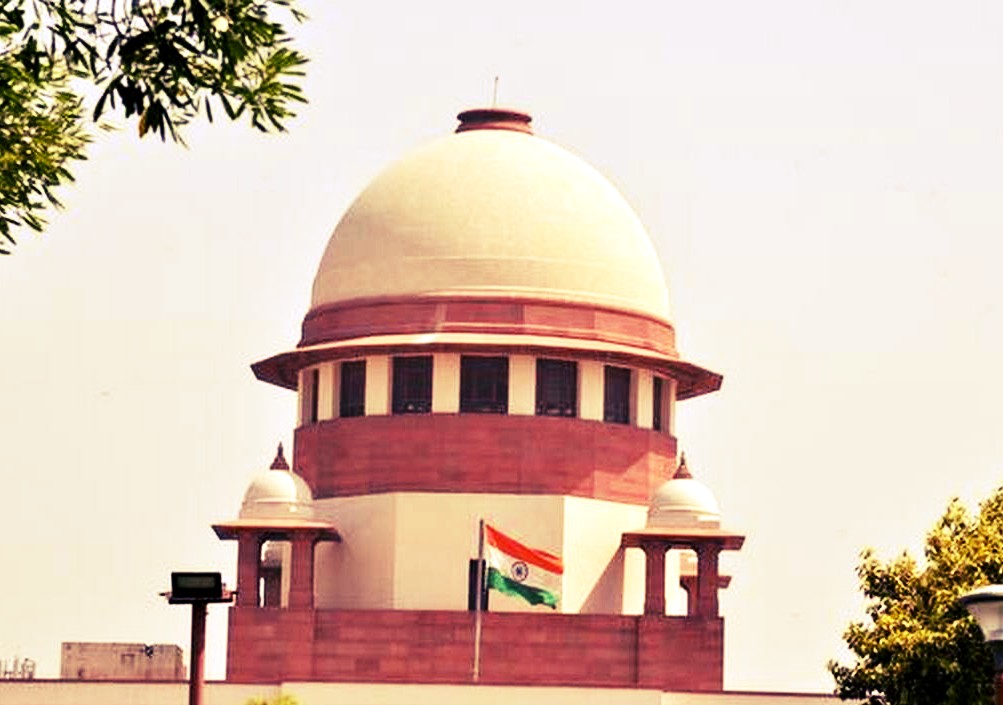
Read Judgment:Madhyamam Broadcasting Limited Vs. Union Of India & Ors
Tulip Kanth
New Delhi, April 10, 2023:While allowing the appeal filed by a Broadcasting Company, challenging the revocation of permission to uplink and downlink a Malayalam news channel called Media One and also questioning the denial of security clearance, the Supreme Court has held that a fair hearing was denied to the appellants as the Ministry of Information and Broadcasting as well as MHA did not provide a reasoned order denying the renewal of license and disclosed the material only to the Court in a sealed cover.
“The procedure that was followed by the High Court has left the appellants in a maze where they are attempting strenuously to fight in the dark. The non-disclosure of reasons for denial of security clearance to the appellants and the disclosure solely to the Court in a sealed cover has restricted the core of the principles of the natural justice - the right to a fair and reasonable proceeding”, the Division Bench of Chief Justice D.Y. Chandrachud and Justice Hima Kohli said.
By an order Union Ministry of Information and Broadcasting (MIB) gave Madhyamam Broadcasting Limited (MBL) permission to uplink Media One for a period of ten years under the Policy Guidelines for Uplinking of Television Channels from India (Uplinking Guidelines).In 2022, the MIB revoked the permission which it had granted to MBL.
The appellants, comprising of MBL, the trade union of working journalists, and the editor, Senior Web Designer and Senior Cameraman of Planetcast Media Services Ltd, initiated proceedings under Article 226 of the Constitution before the Kerala High Court challenging the action of the first respondent.
A Single Judge-Bench dismissed the petitions and the writ appeal was dismissed by the Division Bench of the High Court. The High Court relied on material which was disclosed solely to the Court in a sealed cover by the second respondent, the Union Ministry of Home Affairs (MHA). The appellants instituted proceedings under Article 136 of the Constitution to challenge the correctness of the judgment of the Division Bench of the High Court.
The petitioner had raised a strong argument that the Union of India, by submitting material in a sealed cover, and the High Court, by relying on it in the course of its judgment, negated the principles of natural justice. This procedure, as per MBL, was violative of the principle of an open court and of fairness to parties.
The Top Court opined that after the judgment of this court in Maneka Gandhi v. Union of India, where this court prioritised the process (and the effect of the process) as opposed to the outcome (and the objective of the outcome), it is sufficient if the affected party proves that the procedure that was followed by the adjudicating authority was not procedurally fair and reasonable without any reference to the impact on the outcome due to non-compliance.
Noting that the MHA disclosed the material forming the opinion for denying of security clearance solely to the High Court, the Bench held that the High Court instead of deciding if any other less restrictive but equally effective means could have been employed, straight away received the material in a sealed cover without any application of mind.
Undertaking a comparative analysis of the impact of the alternative means identified (public interest immunity) and the means used (sealed cover) on fundamental rights, the Bench said, “...it is sufficient to state that if the purpose could be realised effectively by public interest immunity proceedings or any other less restrictive means, then the sealed cover procedure should not be adopted. The court should undertake an analysis of the possible procedural modalities that could be used to realise the purpose, and the means that are less restrictive of the procedural guarantees must be adopted.”
Considering such factual and legal aspects, the Bench held that that the respondents by not providing a reasoned order denying the renewal of license, not disclosing the relevant material, and by disclosing the material only to the court in a sealed cover had violated the appellants’ right to a fair hearing protected under Article 21 of the Constitution.
“The action of the MIB by denying a security clearance to a media channel on the basis of the views which the channel is constitutionally entitled to hold produces a chilling effect on free speech, and in particular on press freedom. Criticism of governmental policy can by no stretch of imagination be brought withing the fold of any of the grounds stipulated in Article 19(2)”, the Bench remarked.
The Top Court also opined that MBL cannot be said to be indulging in religious proselytization for merely publishing reports on the alleged discrimination against the Muslim community in India, or infringing safety concerns by a mere reference to the shareholding pattern of MBL.
Thus, allowing the appeals and setting aside the orders of the MIB & the judgment of the High Court, the Bench held, “ The appellants have proved that MBL’s right to a fair hearing has been infringed by the unreasoned order of the MIB dated 31 January 2022, and the non-disclosure of relevant material to the appellants, and its disclosure solely to the court.”
“ ….while public interest immunity claims conceivably impact the principles of natural justice, sealed cover proceedings infringe the principles natural justice and open justice”, the Bench stated while holding that the challenge to the order of MIB is allowed on substantive grounds.
The Bench concluded the matter by observing, “The non-renewal of permission to operate a media channel is a restriction on the freedom of the press which can only be reasonably restricted on the grounds stipulated in Article 19(2) of the Constitution. The reasons for denying a security clearance to MBL, that is, its alleged anti- establishment stance and the alleged link of the shareholders to JEI-H, are not legitimate purposes for the restriction of the right of freedom of speech protected under Article 19(1)(a) of the Constitution. In any event, there was no material to demonstrate any link of the shareholders, as was alleged”
Legitquest is a Legal-Tech venture run by a versatile team of tech-savvy attorneys, engineers and designers who aim to make the practice of law simpler for its end users. We have eminent jurist Mr. Ram Jethmalani as our patron

Add a Comment